India's Renewable Energy Sector: An Industry Outlook
A brief dive into the renewable energy industry in India.
Aritra Banerjee
3/19/20265 min read
General Industry Outlook
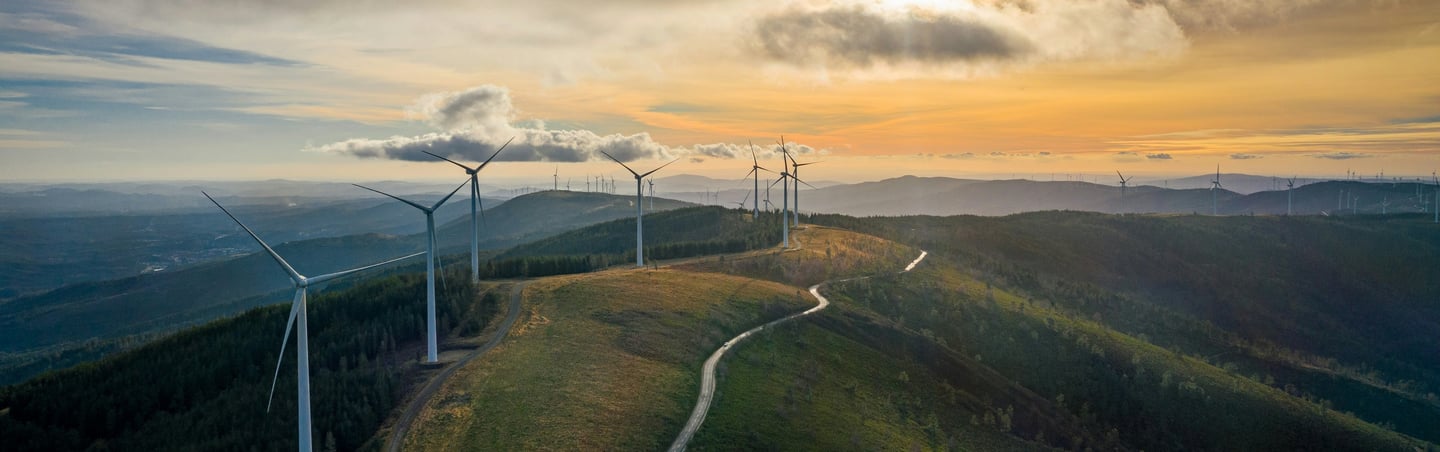
India's renewable energy sector has emerged as one of the most compelling structural growth stories in global emerging markets. The country currently ranks fourth globally in total renewable energy installed capacity, wind power capacity, and solar power capacity, and has recently overtaken Japan to become the world's third-largest solar energy producer.
As of October 2025, India's total installed renewable energy capacity stood at 250.6 GW, representing 39.66% of the country's total installed power generation capacity. Solar alone contributed 129.92 GW, accounting for 64.87% of the renewable mix, underscoring the asset class's dominance in the capacity addition pipeline. The sector has compounded at an 18.5% CAGR between FY16 and FY26, making it one of the fastest-growing large-scale renewable markets globally.
India's overarching policy commitment to achieve 500 GW of non-fossil-fuel energy capacity by 2030, reduce carbon intensity by 45% versus 2005 levels, meet 50% of energy requirements via renewables by 2030, and attain net-zero emissions by 2070, provides the regulatory underpinning for what we assess as a multi-decade structural investment super-cycle.
Demand & Supply Trend
Power demand in India has maintained a robust upward trajectory over the past decade. Peak energy demand compounded at 4.7% CAGR from 148 GW in FY14 to 216 GW in FY23. Looking ahead, the Central Electricity Authority (CEA) projects all-India peak demand to reach 277 GW and energy requirement at 1,908 BU by FY27, growing at CAGRs of 4.8% and 4.5% respectively. For FY27 to FY32, this acceleration intensifies, with energy requirements and peak demand expected to grow at 5.3% and 5.7% CAGRs respectively, reflecting industrial deepening, urbanization, and electrification of mobility.
On the supply side, renewable capacity additions are accelerating sharply. The Ministry of New and Renewable Energy (MNRE) has announced plans to bid 50 GW of renewable capacity annually through FY24 to FY28. Total installed renewable power capacity is thus projected to reach 336 GW by FY27 and 595 GW by FY32, with solar, wind, and hydro comprising 55%, 22%, and 16% of that mix. At 595 GW, renewables are expected to account for 66% of total installed power capacity.
Technological Shifts
The Indian renewable energy ecosystem is undergoing a profound technological evolution across generation, storage, transmission, and ancillary services. We identify four key themes from a technological POV:
Tariff-Competitiveness of Solar & Wind Energy:
Solar tariffs have declined sharply from Rs. 6.47/kWh in FY14 to Rs. 2.9/kWh in FY23, largely driven by module price deflation, economies of scale, and improved efficiency. Wind tariffs have similarly declined from Rs. 5.9/kWh in FY15 to Rs. 3.1/kWh in FY23, following the shift from Feed-in-Tariffs to competitive reverse auctions. Both solar and wind are now cost-competitive with, and often cheaper than, the new coal-based thermal power, fundamentally altering the marginal cost curve for new capacity additions.
Battery Energy Storage System (BESS):
Energy storage is emerging as the critical enabler for renewable penetration beyond 50%. The government has proposed Viability Gap Funding (VGF) for 4,000 MWh of BESS under the Union Budget 2023–24. Utility-scale storage requirements are projected to reach 327 GWh by 2030, requiring cumulative investment of approximately Rs. 3,493 billion between FY24 to FY32. Lithium-ion technology currently dominates, though India's near-total import dependence on lithium remains a structural vulnerability.
Green Hydrogen:
The National Green Hydrogen Mission, approved in January 2023 with an initial outlay of Rs. 197.44 billion, targets annual production of 5 MMT of green hydrogen by 2030, requiring approximately 125 GW of associated renewable capacity. India's electrolyser manufacturing is nascent, but the PLI scheme for electrolysers is expected to catalyze domestic capacity. Total investment demand in the green hydrogen value chain (electrolyser + ammonia infrastructure) is estimated at Rs. 3,030 billion by 2030.
Smart Grid Transmission:
To integrate 500 GW of non-fossil fuel capacity, India requires ~50,890 circuit-km of new transmission lines and 4,33,575 MVA of substation capacity. Total green transmission investment is estimated at Rs. 2,440 billion, of which Rs. 2,160 billion relates to onshore solar and wind and Rs. 281 billion to offshore wind integration. Smart metering and DER management platforms will be critical to managing the complex two-way power flows in this new grid architecture.
Macroeconomic Influences:
India's macroeconomic backdrop is broadly supportive of the renewable energy investment thesis, although with several crosscurrents that merit monitoring.
GDP Growth: India remains the fastest-growing major economy globally, with the IMF projecting sustained growth of ~6.3% through CY28. A USD 3.4 trillion economy in CY22, India is on track to become the world's third-largest economy by CY27 (USD 5.2 trillion), driving structural electricity demand growth. Per the IEA, electricity consumption closely tracks GDP growth, every 1% of GDP growth historically correlates with commensurate increases in power demand.
Capital Investment Cycle: Gross Fixed Capital Formation as a percentage of GDP reached a decade high of 34% in FY23. Government capital expenditure of Rs. 10 lakh crores in FY24 is creating significant infrastructure multiplier effects, positively impacting renewable capacity additions, transmission buildout, and manufacturing of energy equipment.
Interest Rate Environment: RBI held the repo rate at 6.5% through H2 2023 following aggressive tightening. Elevated interest rates increase the cost of project finance for capital-intensive renewable assets, pressuring project IRRs. However, with inflation moderating toward the 5% range, we expect the rate cycle to ease, reducing the cost of capital for new RE projects.
Currency Risk: The Indian rupee has traded in the Rs. 81 to 83/USD range, supported by RBI intervention. Given India's heavy import dependence on solar modules, predominantly from China, rupee depreciation materially increases landed module costs, as evidenced by the 36% increase in solar bid tariffs in FY22 driven partly by currency and commodity effects.
FDI and Green Finance: Non-conventional energy has attracted Rs. 2,04,341 crore (USD 23.04 billion) in cumulative FDI inflows from April 2000 to June 2025. Indian conglomerates have committed Rs. 67,42,400 crore (USD 800 billion) toward green hydrogen, clean energy, semiconductors, and EVs by 2034. India's green bond market has reached USD 21 billion as of early 2023, with sovereign green bonds issued for the first time in January 2023.
Conclusion:
India's renewable energy sector represents one of the most structurally sound long-term investment themes in global emerging markets, underpinned by sovereign policy commitments, a demographically driven demand growth engine, rapidly improving project economics, and a maturing financing ecosystem. The sector's multi-decade Rs. 24+ trillion capital deployment requirement offers significant investable opportunities across the value chain for project developers, equipment manufacturers, transmission infrastructure, and sector-focused NBFCs. Key risks to monitor include module import dependency from China, DISCOM counterparty risk, interest rate sensitivity, and execution risk on grid integration.
Note: All the information in this industry outlook report has been derived from two sources –
Indian Brand Equity Foundation’s Renewable Energy Industry Report, November 2025 (https://www.ibef.org/industry/renewable-energy)
CareEdge Research’s Industry Research Report on Renewable Energy, Green Technologies and Power focused NBFCs, November 2023.